
Getting enough supervised practice is one of the most important parts of learning to drive safely. Texas does not treat the learner-license period as simply waiting for time to pass; it is meant to give teens structured experience in different driving situations.
Quick answer: Texas DPS currently requires teen applicants for a provisional license to complete 30 hours of behind-the-wheel practice with a licensed driver age 21 or older, including at least 10 hours at night. Always verify the latest requirements on the Texas DPS provisional-license page.
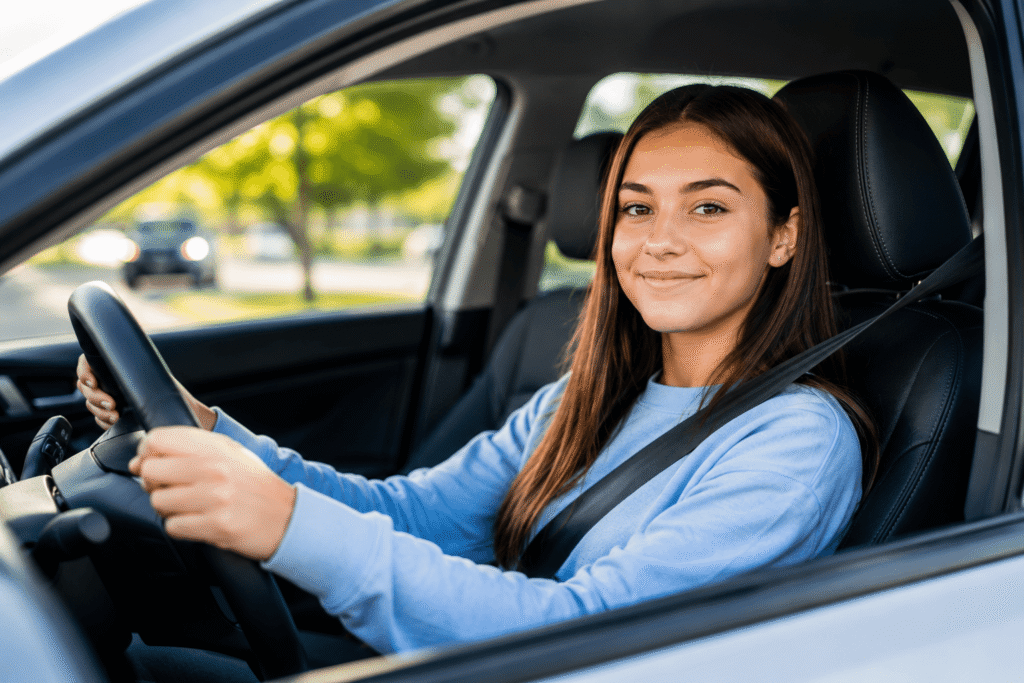
Do not try to complete the hours all at once
Driving skill develops through repetition. One long weekend of practice is not the same as several weeks of short, focused sessions. A better approach is to build a schedule that gradually adds complexity.
A practical four-stage practice plan
Stage 1: Quiet streets and basic control
Start with smooth acceleration, braking, steering, lane position, right and left turns, complete stops, and consistent mirror checks. Keep sessions short enough that the student stays focused.
Stage 2: Normal neighborhood and city traffic
Add multi-lane roads, protected and unprotected turns, lane changes, school zones, pedestrians, cyclists, and more frequent decision-making. Parents should reduce coaching over time so the student learns to scan and decide independently.
Stage 3: Higher-speed roads
Once the teen is comfortable with basic traffic, practice entering and exiting larger roads, maintaining speed, managing following distance, and reading traffic farther ahead. If freeway driving is still stressful, our private driving lessons can provide instructor-guided practice.
Stage 4: Nighttime and varied conditions
Night driving changes visibility, depth perception, glare, and the amount of time a driver has to react. Texas requires a portion of the supervised practice hours to occur at night, so do not leave all nighttime practice until the final week.
What should parents track?
Keep a simple practice log with the date, approximate duration, road type, conditions, and skills practiced. The goal is not just to count minutes. A useful log helps you see what the teen has not experienced yet.
Examples of useful practice categories include:
- Residential streets
- Busy intersections
- Lane changes
- Parking and backing
- Highway or freeway entry and exit
- Night driving
- Rain or reduced visibility when conditions are safe enough for supervised practice
How much coaching is too much?
Early in training, clear coaching is appropriate. As the teen improves, constant instructions can become a crutch. Try asking questions such as “What do you see ahead?” or “What is your safest option here?” instead of giving every answer immediately.
Use professional lessons to fill skill gaps
Family practice and professional instruction serve different purposes. A certified instructor can identify habits a parent may overlook and help the student practice difficult situations in a structured way. Learn more about our Teen Drivers ED program.
Before moving toward the provisional license
Do not schedule the road test simply because the practice-hour requirement is complete. The teen should be able to drive safely without constant reminders, handle unfamiliar roads, recover calmly from small mistakes, and make appropriate right-of-way decisions.
Texas licensing rules can change. Confirm the current practice-hour and eligibility requirements with Texas DPS.