
A teen’s first months of independent driving are when family expectations matter most. Passing the road test shows that the teen met the testing standard on that day, but it does not mean they have experienced every situation they will face alone.
Quick answer: during the first 90 days, focus on predictable routes, legal passenger and nighttime limits, no-phone habits, gradual exposure to harder roads, and regular check-ins about what felt difficult.
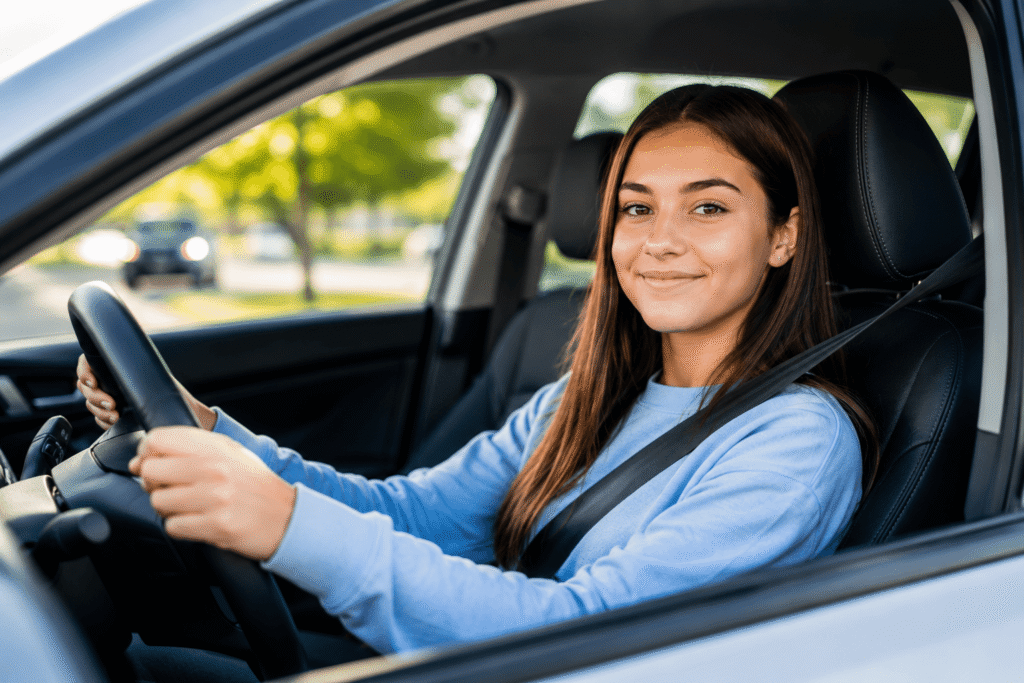
Days 1–30: Keep the driving environment simple
Start with familiar trips such as school, work, or nearby errands. Avoid adding multiple new challenges at once. A new license is not the best time to combine an unfamiliar freeway route, several friends in the car, and bad weather.
Review Texas provisional-license restrictions
Texas DPS currently limits certain passengers, restricts most driving between midnight and 5:00 a.m., and prohibits cell-phone use for provisional teen drivers except in an emergency. Review the current rules directly on the Texas DPS provisional-license page.
Days 31–60: Add controlled complexity
Once the teen is handling routine trips consistently, add new routes, busier intersections, parking garages, and higher-speed roads. The goal is not to make every drive harder; it is to expand experience without overwhelming the driver.
Keep a no-phone routine
Do not depend on willpower. Set navigation before driving, enable Do Not Disturb, and keep the phone out of reach. NHTSA identifies distraction as a major risk for teen drivers and recommends clear family rules. See NHTSA teen-driving guidance.
Days 61–90: Review habits, not just outcomes
A teen can reach the destination without a crash and still have unsafe habits. Ask about following distance, speeding, yellow-light decisions, parking, distractions, and near-misses.
Use occasional supervised drives
Even after independent driving begins, ride along occasionally. Do not turn every trip into a test. Instead, observe whether the teen scans consistently, manages speed, and makes decisions without prompting.
Make a plan for difficult situations
Discuss what the teen should do if:
- Weather becomes severe
- The vehicle has a warning light or flat tire
- They are involved in a minor crash
- They feel too tired to drive
- Friends pressure them to violate passenger limits
- They get lost or miss an exit
When extra instruction helps
If a teen passed the test but still avoids freeway driving, struggles with parking, or becomes anxious in heavy traffic, targeted instruction can help. Our private driving lessons can focus on those specific areas.
The first 90 days should not be about proving independence as quickly as possible. They should be about building judgment while the family still provides structure.